Water Damage Restoration in Brooklyn Center, MN
Brooklyn Center is the first-ring suburb southeast of Maple Grove, between Brooklyn Park and the Minneapolis line, with about 33,000 people on flat ground along the Mississippi and Shingle Creek. Almost all of its housing went up in one burst between 1950 and 1965: ramblers and a few split-levels on fifty- and sixty-foot lots, with block basements, floor drains tied to clay sewer lines, and no sump pits until owners added them later. Earle Brown's farm, once the largest in the area, became the civic center and the Heritage Center.
A 1955 rambler has a shallow block basement and sixty-year-old plumbing. The block weeps at the joints when the ground is saturated, the clay sewer line between the house and the street has roots in it, and the galvanized supply lines in the exterior walls have no insulation around them. Shingle Creek runs through the middle of town and rises fast in a summer storm, and the Mississippi sets the water table on the east side, as it did through the June 2014 rains.
This site connects Brooklyn Center homeowners by phone with an independent local water damage provider. The provider reads the block wall and the floor drain before anything is decided.
Brooklyn Center water damage in a 1950s rambler
A basement that took water through the block in a wet spring is a basement flooding cleanup. A floor drain that backed up through a root-choked clay line is a sewer backup cleanup, handled under contaminated-water rules. A galvanized line that froze in an uninsulated wall is a frozen pipe cleanup.
The farm that became the civic center
The City of Brooklyn Center issues its own rebuild permits and runs a point-of-sale inspection program that catches many of these old basements before they are sold. The Heritage Center of Brooklyn Center occupies the restored Earle Brown farm buildings, on the same flat, wet ground the ramblers around it were built on.
Call (763) 314-1771 and describe the basement. An independent local water damage provider serving Brooklyn Center takes it from there.
Services Available in Brooklyn Center
Basement Flooding Cleanup
Water pumped out of a finished lower level under a Maple Grove two-story, then pad, drywall, and the bottom plate metered to see what stayed wet.
Sump Pump Failure Cleanup
Cleanup after the pump lost power in a thunderstorm or drowned in the March thaw, plus drying of the floor and walls the pit overflow reached.
Frozen Pipe Cleanup
Cleanup after a supply line froze above the garage, in a rim joist, or behind a kitchen sink and let go when the cold broke.
Ice Dam Water Damage
Attic insulation, upstairs ceilings, and exterior walls dried after an ice dam at the eave pushed meltwater under the shingles.
Structural Drying
Air movers and dehumidifiers set by daily readings until joists, studs, subfloor, and drywall come back to dry in a closed-up Minnesota house.
Leak Detection
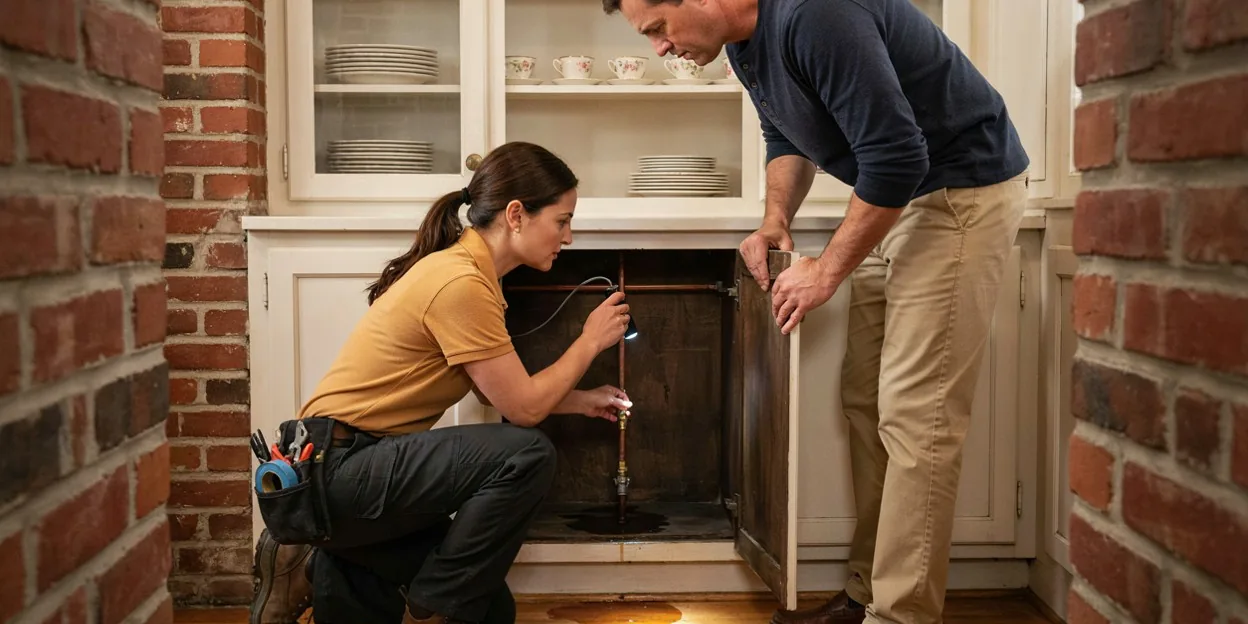
The source traced for a damp spot, a high water bill, or a stain with no obvious leak, before any wall or floor in the house gets opened.
Ceiling Water Damage Repair
A sagging or stained ceiling below an upstairs bath or laundry dried, opened where the readings say so, and made ready for the rebuild.
Sewer Backup Cleanup
Contaminated water from a floor drain or a backed-up main line removed from a basement, with the materials it touched taken out and the slab cleaned.